
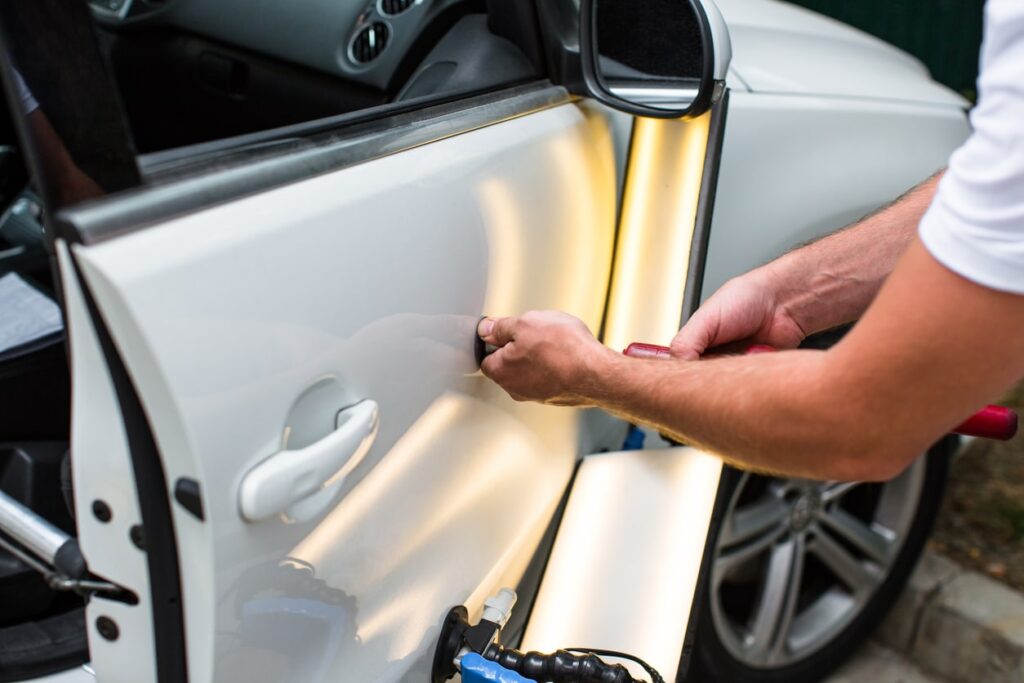
When your car gets a dent, the damage often extends beyond the surface. A dent changes the shape of the panel, but the impact also affects the surrounding paint. You may see cracks, marks, or lacquer damage that needs more than a simple polish. Accurate colour matching becomes essential when the repair includes paintwork. You want a result that blends with the rest of the vehicle, looks consistent in all lighting conditions, and restores a clean finish. Precise colour matching protects the look of your car, preserves its value, and ensures the repair meets a professional standard.
Colour matching is a technical process that combines experience, paint knowledge, and advanced tools. Some dents can be repaired without paint, but when the surface coating has been marked, the only way to achieve a true finish is to apply paint that matches the existing panel. This process requires the right equipment and environment to ensure the result remains stable over time. Understanding how colour matching works gives you confidence in the repair and helps you make informed decisions about your vehicle.

Why Does Colour Matching Matter When You Repair A Dent?
Colour matching is crucial because your car’s paint finish must remain consistent across every panel. Even a slight difference creates a visible patch that draws attention to the repaired area. If the dent has affected a section of paint, the surface may show dull marks, lines, or cracking that cannot be restored with polishing. A proper repair requires paint that seamlessly integrates with the existing finish, with no discernible difference in tone or texture.
Accurate matching also protects the long-term appearance of your vehicle. If the new paint does not blend with the surrounding panels, the mismatch becomes more visible as the paint weathers. This affects the car’s appearance and reduces its resale value. A consistent finish ensures the repair remains secure and the panel continues to look correct in different conditions.
How Do We Identify Your Car’s Exact Paint Colour?
Every car has a paint code set by the manufacturer. This code gives the starting point for any colour match. The code is usually located inside the door, under the bonnet, or inside the boot. This information identifies the original paint used at the factory, including metallic, solid, or pearlescent finishes. The code guides the initial paint mix before any adjustments are made.
Cars age, and paint changes with exposure to sunlight, weather, and road conditions. This means the original paint code does not always match the current appearance of your car. If the paint has faded or changed tone over time, the repair needs more than a standard formula. The colour must be adjusted by a technician who understands how to compare the panel with the mixed paint and make refinements until the match is correct.
What If Your Paint Has Faded Over Time?
Sun exposure and daily use can affect your car’s paint over time. Panels on the same vehicle may fade at different rates depending on their position. When a repair takes place, the technician checks the current shade of the panel and adjusts the paint to reflect the present condition, not the original code. This ensures the repair blends with the existing finish and does not draw attention to the repaired area.
A faded panel requires a more detailed assessment. The colour must be mixed carefully, then compared against the panel under controlled lighting. Precision matters, as even a slight mismatch becomes noticeable when the repair is complete. Adjusting the colour to suit the panel ensures the correct result.
What Technology Is Used To Create An Accurate Colour Match?
Modern paint matching uses a combination of digital tools and professional refinishing systems. A spectrophotometer reads the colour directly from the panel. It measures the shade, tone, and characteristics of the paint. The data then generates a formula that creates a close match to the measured colour. This formula serves as the foundation for the technician to refine and adjust as needed.
Once the colour is mixed, the technician checks it under controlled lighting. Spray cards help test how the colour behaves on a surface. This test shows how the paint blends with the vehicle and highlights areas that need adjustment. When the technician is satisfied, the paint is prepared for application in a spray booth where airflow, lighting, and temperature remain stable.
How Do Technicians Blend New Paint With The Rest Of The Panel?
Blending is the process that joins the new paint with the existing finish. Instead of painting a small patch, the repair extends across the panel to create a natural transition. The fresh paint is applied in thin layers and gradually expanded to merge with the original coating. This avoids creating a hard line between the new and old paint.
A clear lacquer completes the repair. This layer protects the colour and gives the surface a uniform finish. The lacquer is applied across the whole panel or blended further when needed. The aim is to achieve an even finish that reflects light in the same way as the rest of the vehicle. Blending is a skilled process, and correct blending ensures the repair remains invisible.
Why Is Blending Essential For Metallic And Pearlescent Paint?
Metallic and pearlescent paints contain particles that reflect light at different angles. The direction of these particles affects how the paint appears in sunlight and under artificial lighting. When repairing dents on these finishes, blending becomes even more critical. Without blending, the repaired section may look brighter or darker than the rest of the panel.
Blending ensures the particles settle naturally across the panel, creating a uniform appearance. This avoids patches and maintains the depth of colour. Metallic and pearlescent finishes require technique, as even slight errors can alter the overall appearance of the entire panel.
Need Colour Matched Dent Repair In Nottingham?
If your car has a dent that needs accurate paint matching, you want a repair you can trust. Fleetcare Accident Repair Centre offers colour-matched dent repairs in Nottingham, utilising advanced tools and proven methods. You can contact the team for a quote, send images of the damage, or arrange a visit to discuss your repair in person. Your vehicle will be repaired to a high standard and returned in excellent condition.


